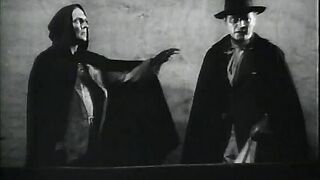

Night Tide - 1961


Duration: 1:26:02
Views: 74
Submitted: 20 hours ago
Submitted by:
Description:
Curtis Harrington’s *Night Tide* is an atmospheric, low-budget jewel of American independent cinema that occupies a strange, liminal space between French New Wave aesthetics and classic supernatural horror. Filmed on the foggy, dilapidated piers of Santa Monica and Venice, California, the movie eschews the sensationalism common to early sixties genre films in favor of a dreamlike, maritime melancholia. The story follows Johnny Drake, a young sailor on shore leave played by a remarkably youthful and understated Dennis Hopper. Johnny becomes infatuated with Mora, a mysterious young woman who performs as a mermaid in a sideshow attraction on the boardwalk. As their romance deepens, Johnny is drawn into a localized mythology involving the "Sea People," as Mora’s guardian—a sinister, overbearing Captain—convinces her that she is a literal siren destined to kill the men she loves during the full moon.
The film’s greatest strength lies in its masterful use of location to evoke a sense of "coastal gothic." Harrington utilizes the rickety wooden structures, the rhythmic crashing of the Pacific waves, and the tawdry, fading glamour of the amusement park to create a world that feels both grounded in reality and untethered from time. The black-and-white cinematography is stark and moody, capturing the loneliness of the boardwalk at night in a way that feels deeply indebted to the Val Lewton horror tradition. Rather than relying on jump scares or elaborate creature effects, *Night Tide* builds tension through psychological ambiguity. The audience is kept in a state of constant uncertainty: is Mora truly a supernatural being, or is she the victim of a deep-seated psychosis fueled by the Captain’s manipulative storytelling? This ambiguity allows the film to function as a poignant allegory for the fear of intimacy and the shadows cast by past traumas.
Dennis Hopper provides a sensitive, vulnerable performance that stands in sharp contrast to the high-strung, eccentric roles that would define his later career. His Johnny is an innocent abroad, moving through the seaside town with a quiet curiosity that makes his eventual peril feel genuinely tragic. Opposite him, Linda Lawson imbues Mora with an ethereal, tragic beauty; she portrays the character not as a predatory monster, but as a frightened woman trapped between two worlds. The supporting cast, including a cryptic tarot card reader and the prophetic "Woman in Black," adds layers of occult texture that enhance the film’s hypnotic quality. The jazz-inflected score further reinforces the "beat" sensibility of the era, grounding the mystical elements in a cool, urban sophistication.
Ultimately, *Night Tide* is a film about the power of belief and the way we project our fears and desires onto the people we love. Its slow-burn pacing and focus on mood over plot may alienate those seeking traditional thrills, but for fans of poetic, atmospheric cinema, it remains a hauntingly beautiful experience. It serves as a vital bridge between the classical Hollywood horror of the 1940s and the experimental, auteur-driven cinema of the late 1960s. Harrington’s debut is a quiet, shimmering ripple in the history of the genre, proving that the most enduring monsters are often the ones we carry within ourselves, whispered to life by the sound of the tide.
The film’s greatest strength lies in its masterful use of location to evoke a sense of "coastal gothic." Harrington utilizes the rickety wooden structures, the rhythmic crashing of the Pacific waves, and the tawdry, fading glamour of the amusement park to create a world that feels both grounded in reality and untethered from time. The black-and-white cinematography is stark and moody, capturing the loneliness of the boardwalk at night in a way that feels deeply indebted to the Val Lewton horror tradition. Rather than relying on jump scares or elaborate creature effects, *Night Tide* builds tension through psychological ambiguity. The audience is kept in a state of constant uncertainty: is Mora truly a supernatural being, or is she the victim of a deep-seated psychosis fueled by the Captain’s manipulative storytelling? This ambiguity allows the film to function as a poignant allegory for the fear of intimacy and the shadows cast by past traumas.
Dennis Hopper provides a sensitive, vulnerable performance that stands in sharp contrast to the high-strung, eccentric roles that would define his later career. His Johnny is an innocent abroad, moving through the seaside town with a quiet curiosity that makes his eventual peril feel genuinely tragic. Opposite him, Linda Lawson imbues Mora with an ethereal, tragic beauty; she portrays the character not as a predatory monster, but as a frightened woman trapped between two worlds. The supporting cast, including a cryptic tarot card reader and the prophetic "Woman in Black," adds layers of occult texture that enhance the film’s hypnotic quality. The jazz-inflected score further reinforces the "beat" sensibility of the era, grounding the mystical elements in a cool, urban sophistication.
Ultimately, *Night Tide* is a film about the power of belief and the way we project our fears and desires onto the people we love. Its slow-burn pacing and focus on mood over plot may alienate those seeking traditional thrills, but for fans of poetic, atmospheric cinema, it remains a hauntingly beautiful experience. It serves as a vital bridge between the classical Hollywood horror of the 1940s and the experimental, auteur-driven cinema of the late 1960s. Harrington’s debut is a quiet, shimmering ripple in the history of the genre, proving that the most enduring monsters are often the ones we carry within ourselves, whispered to life by the sound of the tide.
Categories:
General Audiences