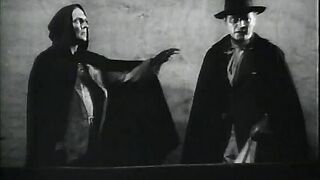

Daring Deeds - 1927


Duration: 49:37
Views: 19
Submitted: 11 months ago
Submitted by:
Description:
The 1927 production of Daring Deeds, directed by Duke Worne, is a spirited example of the "action-comedy" subgenre that flourished during the final years of the silent era. Starring the athletic and charismatic Billy Sullivan, the film was produced by Rayart Pictures Corporation, a studio known for delivering high-energy entertainment to the independent circuit. The narrative follows a classic "hero's journey" archetype: a young man, often perceived as an underdog or a socialite out of his element, is thrust into a series of dangerous circumstances where he must prove his mettle. In this particular outing, Sullivan plays a character who finds himself entangled in a web of mystery and physical peril, providing the perfect canvas for the stunt-heavy sequences that audiences of the mid-twenties craved.
Visually, the film is a testament to the efficient, "no-nonsense" cinematography of the late 1920s. Duke Worne, a prolific director who specialized in fast-paced genre films, prioritized movement and clarity over the experimental abstraction seen in European cinema of the same period. The film’s pacing is relentless; it utilizes the "building block" style of storytelling, where each scene serves to escalate the physical stakes for the protagonist. From roof-top chases to high-speed automotive pursuits, Daring Deeds relies on the genuine physicality of its lead. Billy Sullivan, who came from a famous boxing family, brought an authentic athleticism to the screen that bridged the gap between the slapstick comedy of Buster Keaton and the rugged heroism of Douglas Fairbanks. His ability to perform his own stunts gave the film a visceral quality that resonated with a public increasingly obsessed with "thrill-a-minute" spectacles.
Beyond its entertainment value, Daring Deeds offers a fascinating glimpse into the cultural zeitgeist of the Roaring Twenties. It captures the era’s fascination with speed, modern machinery, and the idea of the self-made man who overcomes adversity through sheer pluck and physical bravery. While it may not have the philosophical depth of the era's grander dramas, its significance lies in its mastery of the "programmer" format—films designed to fill a slot in a theater's weekly rotation while providing maximum excitement. As sound technology began to loom on the horizon, Daring Deeds stood as a final, joyful celebration of the silent screen’s unique ability to tell a story through pure, kinetic motion. It remains a charming artifact of a time when the cinema was a place of unalloyed wonder, where a hero’s smile and a well-timed leap were all that was needed to win the day.
Visually, the film is a testament to the efficient, "no-nonsense" cinematography of the late 1920s. Duke Worne, a prolific director who specialized in fast-paced genre films, prioritized movement and clarity over the experimental abstraction seen in European cinema of the same period. The film’s pacing is relentless; it utilizes the "building block" style of storytelling, where each scene serves to escalate the physical stakes for the protagonist. From roof-top chases to high-speed automotive pursuits, Daring Deeds relies on the genuine physicality of its lead. Billy Sullivan, who came from a famous boxing family, brought an authentic athleticism to the screen that bridged the gap between the slapstick comedy of Buster Keaton and the rugged heroism of Douglas Fairbanks. His ability to perform his own stunts gave the film a visceral quality that resonated with a public increasingly obsessed with "thrill-a-minute" spectacles.
Beyond its entertainment value, Daring Deeds offers a fascinating glimpse into the cultural zeitgeist of the Roaring Twenties. It captures the era’s fascination with speed, modern machinery, and the idea of the self-made man who overcomes adversity through sheer pluck and physical bravery. While it may not have the philosophical depth of the era's grander dramas, its significance lies in its mastery of the "programmer" format—films designed to fill a slot in a theater's weekly rotation while providing maximum excitement. As sound technology began to loom on the horizon, Daring Deeds stood as a final, joyful celebration of the silent screen’s unique ability to tell a story through pure, kinetic motion. It remains a charming artifact of a time when the cinema was a place of unalloyed wonder, where a hero’s smile and a well-timed leap were all that was needed to win the day.
Sponsored by:
Library of Congress
Categories:
General Audiences