
An Indian Summer - 1912


Duration: 17:30
Views: 24
Submitted: 11 months ago
Submitted by:
Description:
D.W. Griffith’s An Indian Summer, released in 1912, is a gentle, introspective departure from the high-octane "race against time" thrillers that defined much of his Biograph output. The film features the legendary Mary Pickford and is a poignant exploration of aging, loneliness, and the cross-generational bridges built through simple human kindness. The story follows an elderly man who, feeling discarded by society and his own family, finds a renewed sense of purpose and warmth through a blossoming friendship with a young woman (Pickford). The "Indian Summer" of the title serves as a double metaphor: it refers to the unseasonably warm autumn days during which the story takes place and the late-stage emotional blooming of the protagonist’s heart.
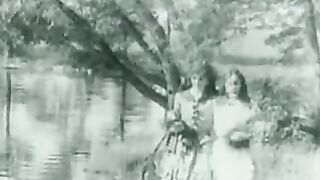
Visually, the film is a masterclass in the "pastoral" style that Griffith and his cinematographer, Billy Bitzer, perfected. Unlike the urban grit of his crime shorts, this production utilizes soft, natural lighting and lush outdoor locations to evoke a sense of nostalgic tranquility. The camera captures the rustling leaves and the dappled sunlight of a park setting with an almost impressionistic quality, mirroring the internal softening of the elderly man’s disposition. Griffith’s use of the medium shot allows the audience to observe the nuanced physical acting of the performers—particularly the contrast between the man’s weary, stooped posture and Pickford’s vibrant, youthful energy. This visual juxtaposition drives the narrative forward more effectively than any intertitle could, showcasing the power of the silent image to convey the passage of time and the weight of lived experience.
An Indian Summer is significant for its focus on a demographic often ignored by early cinema: the elderly. At a time when the "flickers" were largely viewed as a medium for the young and the working class, Griffith dared to present a slow-moving, character-driven study on the dignity of old age. The film also marks a pivotal moment in Mary Pickford’s career, demonstrating her ability to play a role defined by empathy and grace rather than just the spunky "ingenue" archetype. It remains a quiet, beautiful artifact of the Biograph era, proving that Griffith’s genius was not limited to grand spectacles or tense rescues, but extended to the delicate, quiet corners of the human condition. It is a cinematic poem about the warmth that can be found in the twilight of life, provided there is a hand to hold.
Visually, the film is a masterclass in the "pastoral" style that Griffith and his cinematographer, Billy Bitzer, perfected. Unlike the urban grit of his crime shorts, this production utilizes soft, natural lighting and lush outdoor locations to evoke a sense of nostalgic tranquility. The camera captures the rustling leaves and the dappled sunlight of a park setting with an almost impressionistic quality, mirroring the internal softening of the elderly man’s disposition. Griffith’s use of the medium shot allows the audience to observe the nuanced physical acting of the performers—particularly the contrast between the man’s weary, stooped posture and Pickford’s vibrant, youthful energy. This visual juxtaposition drives the narrative forward more effectively than any intertitle could, showcasing the power of the silent image to convey the passage of time and the weight of lived experience.
An Indian Summer is significant for its focus on a demographic often ignored by early cinema: the elderly. At a time when the "flickers" were largely viewed as a medium for the young and the working class, Griffith dared to present a slow-moving, character-driven study on the dignity of old age. The film also marks a pivotal moment in Mary Pickford’s career, demonstrating her ability to play a role defined by empathy and grace rather than just the spunky "ingenue" archetype. It remains a quiet, beautiful artifact of the Biograph era, proving that Griffith’s genius was not limited to grand spectacles or tense rescues, but extended to the delicate, quiet corners of the human condition. It is a cinematic poem about the warmth that can be found in the twilight of life, provided there is a hand to hold.
Sponsored by:
Library of Congress
Categories:
General Audiences