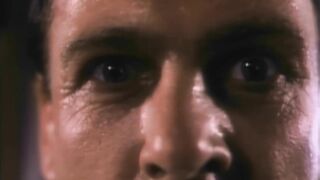

Isle of the Dead - 1945


Duration: 1:08:40
Views: 1.0K
Submitted: 11 months ago
Submitted by:
Description:
Mark Robson’s Isle of the Dead (1945) is perhaps the most claustrophobic and nihilistic entry in the Val Lewton horror cycle. Set during the Balkan Wars of 1912, the film follows a hard-nosed Greek general, played by Boris Karloff, who finds himself quarantined on a small, rocky island with a disparate group of strangers due to a sudden outbreak of the plague. While the threat of disease is the immediate danger, the true terror of the film lies in the psychological disintegration of the survivors. As the bodies pile up and the "science" of the quarantine fails to provide comfort, the characters succumb to ancient superstitions, specifically the fear of the vorvolaka—a vampiric demon from Greek folklore that can possess the living.
Karloff’s performance as General Pherides is a fascinating study in the corruption of a rational mind. He begins the film as a man of iron will, a "protector" who demands order and logic above all else. However, as the unseen plague begins to claim his soldiers and his sanity, he reverts to the primal fears of his ancestors. Karloff brings a weary, tragic gravitas to the role; he is not a monster, but a man so desperate to stop an invisible enemy that he becomes willing to commit horrific acts in the name of safety. The film brilliantly explores the thin veneer of civilization, suggesting that when faced with the inexplicable, even the most disciplined mind can descend into fanatical madness.
The film is a masterclass in low-budget world-building, utilizing a minimalist, stark aesthetic that mirrors the hopelessness of the situation. The cinematography captures the island as a tomb-like labyrinth of white stone and deep, black shadows, where the wind seems to carry the literal sound of the soul departing the body. One of the most famous and harrowing sequences in horror history occurs when a woman, suffering from catalepsy, is accidentally buried alive. The sound of her muffled screams and the scratching of her fingernails against the coffin lid—coupled with the later visual of her standing in the shadows of the tomb wrapped in a burial shroud—creates an atmosphere of pure, existential dread that feels far more modern than its 1945 release date would suggest.
Ultimately, Isle of the Dead is a grim exploration of the power of belief and the inevitability of death. It avoids the romanticism of I Walked with a Zombie or the feline grace of Cat People in favor of a heavy, suffocating realism. By the time the film reaches its violent conclusion, the lines between the plague, the demon, and the madness of the survivors have blurred entirely. It is a film that posits that the greatest fear is not death itself, but the loss of our humanity in the struggle to survive it. For fans of atmospheric horror, it remains a chilling reminder that the mind is its own island, capable of conjuring monsters far more terrifying than any virus.
Karloff’s performance as General Pherides is a fascinating study in the corruption of a rational mind. He begins the film as a man of iron will, a "protector" who demands order and logic above all else. However, as the unseen plague begins to claim his soldiers and his sanity, he reverts to the primal fears of his ancestors. Karloff brings a weary, tragic gravitas to the role; he is not a monster, but a man so desperate to stop an invisible enemy that he becomes willing to commit horrific acts in the name of safety. The film brilliantly explores the thin veneer of civilization, suggesting that when faced with the inexplicable, even the most disciplined mind can descend into fanatical madness.
The film is a masterclass in low-budget world-building, utilizing a minimalist, stark aesthetic that mirrors the hopelessness of the situation. The cinematography captures the island as a tomb-like labyrinth of white stone and deep, black shadows, where the wind seems to carry the literal sound of the soul departing the body. One of the most famous and harrowing sequences in horror history occurs when a woman, suffering from catalepsy, is accidentally buried alive. The sound of her muffled screams and the scratching of her fingernails against the coffin lid—coupled with the later visual of her standing in the shadows of the tomb wrapped in a burial shroud—creates an atmosphere of pure, existential dread that feels far more modern than its 1945 release date would suggest.
Ultimately, Isle of the Dead is a grim exploration of the power of belief and the inevitability of death. It avoids the romanticism of I Walked with a Zombie or the feline grace of Cat People in favor of a heavy, suffocating realism. By the time the film reaches its violent conclusion, the lines between the plague, the demon, and the madness of the survivors have blurred entirely. It is a film that posits that the greatest fear is not death itself, but the loss of our humanity in the struggle to survive it. For fans of atmospheric horror, it remains a chilling reminder that the mind is its own island, capable of conjuring monsters far more terrifying than any virus.
Categories:
General Audiences