
The Satanic Rites of Dracula - 1973


Duration: 1:27:46
Views: 11K
Submitted: 11 months ago
Submitted by:
Description:
Alan Gibson’s The Satanic Rites of Dracula (1973) represents the fascinating, final gasp of the original Hammer Dracula cycle, and it is arguably the most bizarre entry in the entire franchise. Following the previous year’s Dracula A.D. 1972, this sequel doubles down on the "Dracula in the modern world" concept but trades the groovy hippie parties for a grim, Cold War-inspired espionage thriller. The plot is a wild genre mashup: a secret cult of high-ranking government officials is performing blood sacrifices in a secluded manor, and Inspector Murray (Michael Coles) teams up with a descendant of the legendary vampire hunter, Lorrimer Van Helsing (Peter Cushing), to investigate. They soon discover that the Count (Christopher Lee) has reinvented himself as a reclusive billionaire industrialist, D.D. Denham, who plans to unleash a virulent strain of the Black Plague to bring an end to a world he no longer finds worth ruling.
The film is notable for its shift in tone, leaning into a gritty, cynical atmosphere that feels more like an episode of The Avengers or a Bond film than a traditional gothic horror. Christopher Lee’s portrayal of Dracula here is exceptionally weary and nihilistic; he isn't just looking for blood, he is actively seeking his own destruction along with the rest of humanity. This existential dread gives the character a depth that was often missing in his more animalistic appearances. Peter Cushing, as always, is the film's moral compass, bringing an effortless gravitas and urgency to the role of Van Helsing. Watching the two icons face off for the final time in a Hammer production is bittersweet, yet they play the material with absolute conviction, regardless of how far-fetched the "Dracula-as-corporate-tyrant" premise becomes.
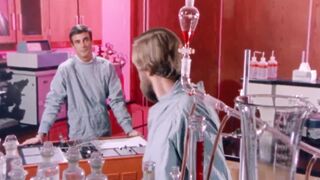
Visually, the film captures the bleak aesthetic of 1970s London, utilizing brutalist architecture and sterile laboratories to contrast with the crimson-soaked ritual chambers of the cult. While the budget constraints are occasionally visible—particularly in the somewhat abrupt and underwhelming demise of the Count in a hawthorn bush—the film compensates with high-stakes tension and a genuinely unsettling opening sequence. The inclusion of motorcycle-riding vampires and high-tech surveillance equipment makes it a unique time capsule of its era. Though it was dismissed by critics at the time and marked the end of an era for Hammer, The Satanic Rites of Dracula has aged into a fascinating cult curiosity. It is a bold, albeit messy, attempt to modernize an ancient evil, proving that Dracula could be just as terrifying behind a corporate desk as he was in a Transylvanian castle.
The film is notable for its shift in tone, leaning into a gritty, cynical atmosphere that feels more like an episode of The Avengers or a Bond film than a traditional gothic horror. Christopher Lee’s portrayal of Dracula here is exceptionally weary and nihilistic; he isn't just looking for blood, he is actively seeking his own destruction along with the rest of humanity. This existential dread gives the character a depth that was often missing in his more animalistic appearances. Peter Cushing, as always, is the film's moral compass, bringing an effortless gravitas and urgency to the role of Van Helsing. Watching the two icons face off for the final time in a Hammer production is bittersweet, yet they play the material with absolute conviction, regardless of how far-fetched the "Dracula-as-corporate-tyrant" premise becomes.
Visually, the film captures the bleak aesthetic of 1970s London, utilizing brutalist architecture and sterile laboratories to contrast with the crimson-soaked ritual chambers of the cult. While the budget constraints are occasionally visible—particularly in the somewhat abrupt and underwhelming demise of the Count in a hawthorn bush—the film compensates with high-stakes tension and a genuinely unsettling opening sequence. The inclusion of motorcycle-riding vampires and high-tech surveillance equipment makes it a unique time capsule of its era. Though it was dismissed by critics at the time and marked the end of an era for Hammer, The Satanic Rites of Dracula has aged into a fascinating cult curiosity. It is a bold, albeit messy, attempt to modernize an ancient evil, proving that Dracula could be just as terrifying behind a corporate desk as he was in a Transylvanian castle.
Categories:
General Audiences