
Charlie Chaplin - His New Job - 1915


Duration: 28:54
Views: 57
Submitted: 22 hours ago
Submitted by:
Description:
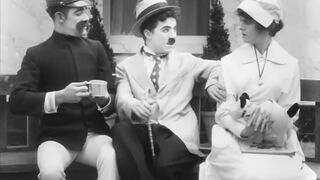
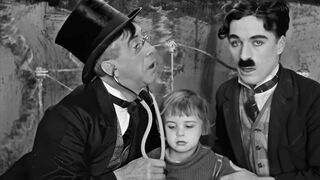
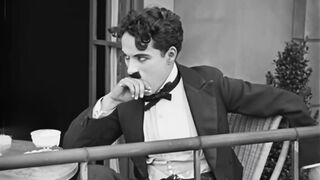
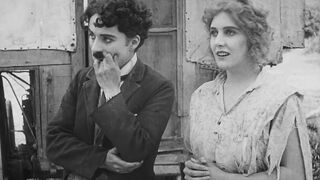
Released in 1915, His New Job holds a significant place in cinema history as Charlie Chaplin’s first film for the Essanay Film Manufacturing Company following his departure from Keystone. The title itself was a meta-commentary on Chaplin's real-life career move, signaled by a massive increase in salary and creative control. Moving the production from the frantic streets of Los Angeles to the more enclosed, theatrical atmosphere of Essanay's Chicago studio, the film serves as a biting satire of the burgeoning motion picture industry. Chaplin plays a bumbling extra who maneuvers his way into a variety of roles at "Lockstone" studio—a thinly veiled jab at his former employer, Keystone—eventually causing absolute carnage on a high-society film set. This setting allowed Chaplin to deconstruct the artifice of filmmaking, showing the ego, the technical mishaps, and the sheer absurdity of the silent film production process.
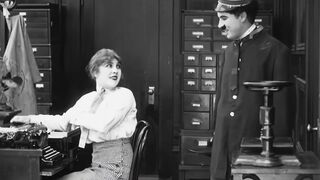
The film is particularly notable for its introduction of several key elements that would become staples of the Chaplin mythos, most importantly the debut of Edna Purviance. After an exhaustive search for a leading lady who could match his comic timing, Chaplin discovered Purviance, beginning a professional and personal partnership that would span over thirty films and provide the emotional anchor for his greatest works. In this debut, she plays a stenographer, and while her role is relatively small compared to her later performances, her screen presence is immediate. Additionally, the film features a brief but memorable appearance by Ben Turpin, whose crossed eyes and lanky frame provided a perfect physical foil to Chaplin’s agile movements. The chemistry between the two during the "crowded dressing room" sequence—where they engage in a frantic, claustrophobic struggle to change costumes—remains one of the film's funniest and most technically impressive moments.
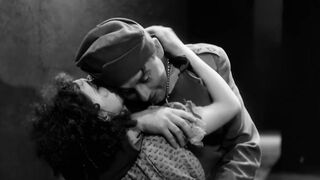
Technically, His New Job demonstrates Chaplin’s growing interest in longer-form narrative and more complex character business. While the slapstick remains violent and energetic, there is a perceptible shift toward a more "dandified" version of the Tramp, who attempts to maintain an air of sophistication even as he accidentally tears the skirt off a leading lady or knocks over a massive pedestal. The film’s centerpiece is the reshooting of a dramatic scene where Chaplin, dressed in an oversized, ill-fitting military uniform, completely undermines the director's vision through his own clumsy interpretation of "acting." By lampooning the pretentiousness of the studio system, Chaplin asserted his own identity as a creator who was larger than the studios that employed him. The film was a massive hit, proving that the public’s obsession with "Charlie" was not tied to a specific studio but to the man himself, setting the stage for the unprecedented creative heights he would reach in the years to follow.
The film is particularly notable for its introduction of several key elements that would become staples of the Chaplin mythos, most importantly the debut of Edna Purviance. After an exhaustive search for a leading lady who could match his comic timing, Chaplin discovered Purviance, beginning a professional and personal partnership that would span over thirty films and provide the emotional anchor for his greatest works. In this debut, she plays a stenographer, and while her role is relatively small compared to her later performances, her screen presence is immediate. Additionally, the film features a brief but memorable appearance by Ben Turpin, whose crossed eyes and lanky frame provided a perfect physical foil to Chaplin’s agile movements. The chemistry between the two during the "crowded dressing room" sequence—where they engage in a frantic, claustrophobic struggle to change costumes—remains one of the film's funniest and most technically impressive moments.
Technically, His New Job demonstrates Chaplin’s growing interest in longer-form narrative and more complex character business. While the slapstick remains violent and energetic, there is a perceptible shift toward a more "dandified" version of the Tramp, who attempts to maintain an air of sophistication even as he accidentally tears the skirt off a leading lady or knocks over a massive pedestal. The film’s centerpiece is the reshooting of a dramatic scene where Chaplin, dressed in an oversized, ill-fitting military uniform, completely undermines the director's vision through his own clumsy interpretation of "acting." By lampooning the pretentiousness of the studio system, Chaplin asserted his own identity as a creator who was larger than the studios that employed him. The film was a massive hit, proving that the public’s obsession with "Charlie" was not tied to a specific studio but to the man himself, setting the stage for the unprecedented creative heights he would reach in the years to follow.
Categories:
General Audiences