
Charlie Chaplin - The Adventurer - 1917


Duration: 25:16
Views: 82
Submitted: 1 week ago
Submitted by:
Description:
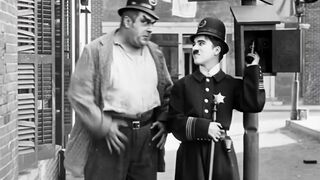
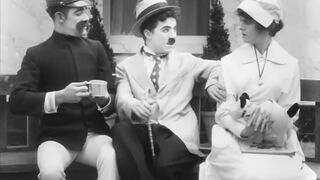
Released in 1917, The Adventurer stands as the final and perhaps most polished film in Charlie Chaplin’s twelve-short contract with the Mutual Film Corporation. This short is a relentless whirlwind of kinetic energy, showcasing Chaplin’s peak physical condition and his growing mastery of cinematic structure. The film begins with a daring escape as the Little Tramp, playing a fugitive from the law, outmaneuvers a squad of bumbling police officers on a steep, sandy cliffside. This opening sequence is a masterclass in spatial comedy, utilizing the verticality of the landscape and the rhythmic timing of near-misses to create a sense of frantic, breathless excitement. By 1917, Chaplin had transcended the simple "kick-and-chase" style of his early career, infusing his stunts with a grace that felt more like a choreographed ballet than a standard brawl.
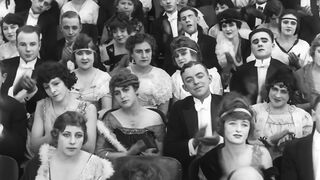
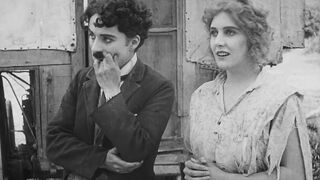
The narrative shifts gears when the Tramp, still in his striped prison suit but disguised in civilian clothes, rescues a drowning woman (Edna Purviance) and her mother, earning himself an invitation to an elite high-society party. This transition provides the perfect backdrop for Chaplin’s favorite comedic theme: the uncouth outsider inadvertently wreaking havoc in a refined social setting. The "Ice Cream" sequence is a legendary highlight of this segment, involving a melting dish of ice cream that accidentally slips down the back of a wealthy guest and eventually finds its way down the dress of another. Chaplin’s ability to maintain a dignified, almost snooty facade while causing absolute domestic carnage is what gives the film its enduring charm. He isn't just a clown; he is a social disruptor who exposes the absurdity of upper-class etiquette through his own clumsy attempts to mimic it.
Technically, The Adventurer benefits immensely from Chaplin’s creative freedom at Mutual, featuring sophisticated editing and a clear sense of geography that was often lacking in silent comedies. The film's villain, played by the towering Eric Campbell in one of his final roles before his untimely death, provides a formidable physical foil to Chaplin’s nimbleness. The contrast between Campbell’s massive, menacing presence and Chaplin’s wiry, opportunistic movements creates a visual tension that drives the film’s final act. As the police eventually track the fugitive to the party, the film culminates in a frantic chase through the mansion that utilizes every door, hallway, and balcony to maximize the comedic potential of the space.
Ultimately, The Adventurer is widely regarded as one of the funniest and most technically accomplished shorts of the silent era. It captures Chaplin at a moment of pure creative joy, just before he transitioned into the more complex, emotionally resonant feature-length films of the 1920s. While it lacks the deep pathos of The Vagabond or the surrealism of The Pawnshop, it excels as a pure, distilled example of slapstick perfection. The film remains a testament to Chaplin's unparalleled timing and his ability to turn a simple premise—a man on the run—into a sophisticated, multi-layered comedy of errors that continues to elicit genuine laughter over a century after its initial release.
The narrative shifts gears when the Tramp, still in his striped prison suit but disguised in civilian clothes, rescues a drowning woman (Edna Purviance) and her mother, earning himself an invitation to an elite high-society party. This transition provides the perfect backdrop for Chaplin’s favorite comedic theme: the uncouth outsider inadvertently wreaking havoc in a refined social setting. The "Ice Cream" sequence is a legendary highlight of this segment, involving a melting dish of ice cream that accidentally slips down the back of a wealthy guest and eventually finds its way down the dress of another. Chaplin’s ability to maintain a dignified, almost snooty facade while causing absolute domestic carnage is what gives the film its enduring charm. He isn't just a clown; he is a social disruptor who exposes the absurdity of upper-class etiquette through his own clumsy attempts to mimic it.
Technically, The Adventurer benefits immensely from Chaplin’s creative freedom at Mutual, featuring sophisticated editing and a clear sense of geography that was often lacking in silent comedies. The film's villain, played by the towering Eric Campbell in one of his final roles before his untimely death, provides a formidable physical foil to Chaplin’s nimbleness. The contrast between Campbell’s massive, menacing presence and Chaplin’s wiry, opportunistic movements creates a visual tension that drives the film’s final act. As the police eventually track the fugitive to the party, the film culminates in a frantic chase through the mansion that utilizes every door, hallway, and balcony to maximize the comedic potential of the space.
Ultimately, The Adventurer is widely regarded as one of the funniest and most technically accomplished shorts of the silent era. It captures Chaplin at a moment of pure creative joy, just before he transitioned into the more complex, emotionally resonant feature-length films of the 1920s. While it lacks the deep pathos of The Vagabond or the surrealism of The Pawnshop, it excels as a pure, distilled example of slapstick perfection. The film remains a testament to Chaplin's unparalleled timing and his ability to turn a simple premise—a man on the run—into a sophisticated, multi-layered comedy of errors that continues to elicit genuine laughter over a century after its initial release.
Categories:
General Audiences