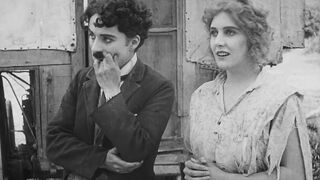

Stella Maris - 1918


Duration: 1:23:28
Views: 146
Submitted: 2 weeks ago
Submitted by:
Description:
Mary Pickford’s 1918 masterpiece, Stella Maris, stands as one of the most sophisticated and daring films of the silent era, effectively shattering the "America’s Sweetheart" archetype that Pickford had spent years cultivating. Directed by Marshall Neilan and based on the novel by William John Locke, the film is a haunting dual-character study that utilizes groundbreaking double-exposure photography to allow Pickford to play two diametrically opposed roles. On one side is Stella Maris, a wealthy, paralyzed girl living in a gilded cage of a bedroom where her family shields her from all knowledge of human suffering, poverty, and war. On the other is Unity Blake, a deformed, unloved orphan raised in the harsh reality of a London workhouse. The film’s narrative power comes from the eventual collision of these two worlds, creating a tragic exploration of class, beauty, and the devastating loss of innocence.
Pickford’s performance is a revelation of technical and emotional skill. As Stella, she is ethereal and radiant, embodying a sheltered purity that borders on the divine. However, it is her transformation into Unity Blake that remains the film's most enduring achievement. Pickford utilized makeup to create a sallow, pinched face and adopted a slumped, defensive posture that made her nearly unrecognizable. Unlike many stars of her time, Pickford was not afraid to appear "ugly" or pathetic to serve the story. The technical feat of having both characters share the screen—sometimes even touching or handing objects to one another—was a marvel of 1918 cinematography. This duality serves as a stark metaphor for the socioeconomic divide of the early 20th century, highlighting how the happiness of the elite is often cushioned by the invisible labor and suffering of the underclass.
The film takes an unexpectedly dark turn as it explores the life of John Risca, a man trapped in a marriage to a violent, alcoholic woman. When Unity is sent to work for them, she becomes a victim of horrific domestic abuse, a sequence that remains jarringly brutal for a film of this vintage. The tragedy deepens when Stella is eventually cured of her paralysis and enters the real world, only to find that it is full of the very ugliness her parents sought to hide. The emotional climax of the film belongs to Unity, whose selfless love for Risca leads her to a desperate, violent sacrifice. This somber resolution subverts the typical "happy ending" associated with Pickford’s brand, offering instead a gritty, Victorian-style melodrama that acknowledges the permanence of trauma.
Ultimately, Stella Maris is a landmark of silent cinema that proved Pickford was a formidable actress and a savvy producer capable of handling complex, adult themes. The film avoids simple moralizing, choosing instead to present a world where virtue does not always protect one from pain and where the "beautiful" and the "grotesque" are inextricably linked. The direction by Neilan is atmospheric and patient, allowing the contrast between the sunny, floral motifs of Stella’s room and the grimy, shadow-drenched world of Unity to heighten the film's emotional impact. A century later, the film remains a poignant reminder of the power of visual storytelling and a testament to Mary Pickford's incredible range as a performer who could command both the light and the dark.
Pickford’s performance is a revelation of technical and emotional skill. As Stella, she is ethereal and radiant, embodying a sheltered purity that borders on the divine. However, it is her transformation into Unity Blake that remains the film's most enduring achievement. Pickford utilized makeup to create a sallow, pinched face and adopted a slumped, defensive posture that made her nearly unrecognizable. Unlike many stars of her time, Pickford was not afraid to appear "ugly" or pathetic to serve the story. The technical feat of having both characters share the screen—sometimes even touching or handing objects to one another—was a marvel of 1918 cinematography. This duality serves as a stark metaphor for the socioeconomic divide of the early 20th century, highlighting how the happiness of the elite is often cushioned by the invisible labor and suffering of the underclass.
The film takes an unexpectedly dark turn as it explores the life of John Risca, a man trapped in a marriage to a violent, alcoholic woman. When Unity is sent to work for them, she becomes a victim of horrific domestic abuse, a sequence that remains jarringly brutal for a film of this vintage. The tragedy deepens when Stella is eventually cured of her paralysis and enters the real world, only to find that it is full of the very ugliness her parents sought to hide. The emotional climax of the film belongs to Unity, whose selfless love for Risca leads her to a desperate, violent sacrifice. This somber resolution subverts the typical "happy ending" associated with Pickford’s brand, offering instead a gritty, Victorian-style melodrama that acknowledges the permanence of trauma.
Ultimately, Stella Maris is a landmark of silent cinema that proved Pickford was a formidable actress and a savvy producer capable of handling complex, adult themes. The film avoids simple moralizing, choosing instead to present a world where virtue does not always protect one from pain and where the "beautiful" and the "grotesque" are inextricably linked. The direction by Neilan is atmospheric and patient, allowing the contrast between the sunny, floral motifs of Stella’s room and the grimy, shadow-drenched world of Unity to heighten the film's emotional impact. A century later, the film remains a poignant reminder of the power of visual storytelling and a testament to Mary Pickford's incredible range as a performer who could command both the light and the dark.
Categories:
General Audiences