
My Man Godfrey - 1936


Duration: 1:33:16
Views: 130
Submitted: 2 weeks ago
Submitted by:
Description:
Gregory La Cava’s 1936 masterpiece, My Man Godfrey, stands as the quintessential screwball comedy, blending dizzying wit with a sharp, biting commentary on the social stratifications of Depression-era America. The film opens in a literal dumping ground, where the spoiled socialite Irene Bullock, played with manic charm by Carole Lombard, encounters "forgotten man" Godfrey Parke, portrayed by a suave and stoic William Powell. In a desperate bid to win a high-society scavenger hunt that requires finding a "forgotten man," Irene hires Godfrey as the family butler. This premise serves as a brilliant vehicle for a "fish-out-of-water" narrative that reverses the traditional roles of master and servant, as the seemingly destitute Godfrey proves to be the only dignified and rational soul in a household populated by the eccentric, dysfunctional, and obscenely wealthy Bullock family.
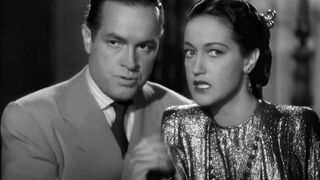
The chemistry between William Powell and Carole Lombard is the film's undeniable engine, made even more fascinating by the fact that the two actors were divorced in real life at the time of filming. Powell’s performance is a masterclass in deadpan restraint; he navigates the chaos of the Bullock mansion with a weary, knowing grace that suggests his character possesses a secret depth. Lombard, conversely, delivers a performance of breathless energy, perfectly capturing the whimsical, if self-centered, kindness of a woman who has never known want. Their interactions are complemented by a stellar supporting cast, including Alice Brady as the scatterbrained matriarch and Mischa Auer as her "protege" Carlo, whose gorilla impersonation remains one of the most bizarre and hilarious highlights of 1930s cinema. Beneath the rapid-fire banter and physical comedy, the film maintains a steady pulse of social consciousness, never letting the audience forget the vast economic chasm that exists just outside the mansion's doors.
Visually, the film utilizes the sleek, Art Deco aesthetics of the period to emphasize the artificiality of the Bullocks' world compared to the grimy realism of the city's shantytowns. As the plot unfolds, it is revealed that Godfrey is not merely a victim of circumstance but a man of high standing who chose to live among the displaced to find a sense of purpose. This revelation allows the film to shift from pure satire into a more redemptive territory, culminating in Godfrey’s efforts to use his newfound position to help his fellow "forgotten men." While some modern critics argue that the film’s resolution—a philanthropic "nightclub" for the poor—is a somewhat simplistic solution to the systemic failures of the Great Depression, the emotional resonance remains intact. My Man Godfrey is more than just a sparkling comedy; it is a sophisticated exploration of dignity, the folly of the idle rich, and the idea that true class has nothing to do with wealth. It remains a definitive entry in the Hollywood canon, proving that the funniest stories are often those that have something serious to say.
The chemistry between William Powell and Carole Lombard is the film's undeniable engine, made even more fascinating by the fact that the two actors were divorced in real life at the time of filming. Powell’s performance is a masterclass in deadpan restraint; he navigates the chaos of the Bullock mansion with a weary, knowing grace that suggests his character possesses a secret depth. Lombard, conversely, delivers a performance of breathless energy, perfectly capturing the whimsical, if self-centered, kindness of a woman who has never known want. Their interactions are complemented by a stellar supporting cast, including Alice Brady as the scatterbrained matriarch and Mischa Auer as her "protege" Carlo, whose gorilla impersonation remains one of the most bizarre and hilarious highlights of 1930s cinema. Beneath the rapid-fire banter and physical comedy, the film maintains a steady pulse of social consciousness, never letting the audience forget the vast economic chasm that exists just outside the mansion's doors.
Visually, the film utilizes the sleek, Art Deco aesthetics of the period to emphasize the artificiality of the Bullocks' world compared to the grimy realism of the city's shantytowns. As the plot unfolds, it is revealed that Godfrey is not merely a victim of circumstance but a man of high standing who chose to live among the displaced to find a sense of purpose. This revelation allows the film to shift from pure satire into a more redemptive territory, culminating in Godfrey’s efforts to use his newfound position to help his fellow "forgotten men." While some modern critics argue that the film’s resolution—a philanthropic "nightclub" for the poor—is a somewhat simplistic solution to the systemic failures of the Great Depression, the emotional resonance remains intact. My Man Godfrey is more than just a sparkling comedy; it is a sophisticated exploration of dignity, the folly of the idle rich, and the idea that true class has nothing to do with wealth. It remains a definitive entry in the Hollywood canon, proving that the funniest stories are often those that have something serious to say.
Categories:
General Audiences