
Charlie Chaplin - The Vagabond - 1916


Duration: 26:40
Views: 146
Submitted: 2 weeks ago
Submitted by:
Description:
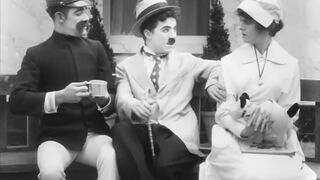
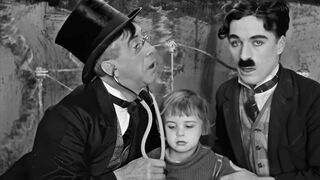
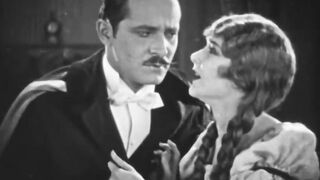
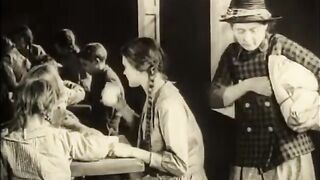
Released in 1916 as his third film for the Mutual Film Corporation, The Vagabond marks a significant turning point in Charlie Chaplin’s career, as it is often cited as the first time he truly integrated poignant drama with his signature slapstick. While his previous work focused largely on chaotic energy and physical humor, this film introduced the "pathetic" element—the bittersweet sentimentality—that would eventually define his legendary persona. In this short, the Little Tramp plays a wandering street musician who finds himself competing for tips with a boisterous German oompah band before fleeing to the countryside, where he rescues a beautiful girl, played by Edna Purviance, from a cruel band of gypsies. This shift from the urban bustle to a pastoral, melodramatic setting allowed Chaplin to experiment with a more complex narrative structure that leaned heavily into the themes of unrequited love and social isolation.
The film's technical and comedic highlights are centered on Chaplin's interactions with his environment and his instruments. The opening sequence, featuring a "duel" between his lone violin and the brassy band, is a brilliant display of timing and visual wit, showcasing the Tramp’s resilience as an underdog. Once the setting shifts to the gypsy camp, the film takes on a more adventurous tone, including a well-choreographed rescue and a domestic sequence where the Tramp attempts to "beautify" the bedraggled girl. These scenes demonstrate Chaplin’s growing interest in character development; he isn't just seeking a laugh but rather trying to earn the audience's empathy. His care for the girl, including the famous scene where he washes her face with a bucket and a mop-like brush, balances absurdity with a genuine, touching tenderness that was revolutionary for film comedy at the time.
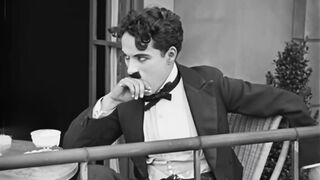
The conclusion of The Vagabond is particularly noteworthy for its departure from the standard "ride off into the sunset" trope, or at least how it plays with those expectations. After the girl is discovered by her wealthy mother and a famous artist who had painted her portrait, she is whisked away to a life of luxury, leaving the Tramp behind in a state of profound loneliness. In a classic "Chaplinesque" twist, she realizes her affection for him and returns to pull him into the carriage, providing a happy ending that feels earned rather than forced. However, the image of the Tramp’s initial rejection and his slumped shoulders remain the more haunting, resonant memory. This film proved that Chaplin was no longer just a clown; he was a sophisticated storyteller capable of manipulating the audience's heartstrings. By blending the hilarious with the heartbreaking, The Vagabond set the stage for his future feature-length masterpieces like The Kid and City Lights, solidifying his status as a cinematic poet of the common man.
The film's technical and comedic highlights are centered on Chaplin's interactions with his environment and his instruments. The opening sequence, featuring a "duel" between his lone violin and the brassy band, is a brilliant display of timing and visual wit, showcasing the Tramp’s resilience as an underdog. Once the setting shifts to the gypsy camp, the film takes on a more adventurous tone, including a well-choreographed rescue and a domestic sequence where the Tramp attempts to "beautify" the bedraggled girl. These scenes demonstrate Chaplin’s growing interest in character development; he isn't just seeking a laugh but rather trying to earn the audience's empathy. His care for the girl, including the famous scene where he washes her face with a bucket and a mop-like brush, balances absurdity with a genuine, touching tenderness that was revolutionary for film comedy at the time.
The conclusion of The Vagabond is particularly noteworthy for its departure from the standard "ride off into the sunset" trope, or at least how it plays with those expectations. After the girl is discovered by her wealthy mother and a famous artist who had painted her portrait, she is whisked away to a life of luxury, leaving the Tramp behind in a state of profound loneliness. In a classic "Chaplinesque" twist, she realizes her affection for him and returns to pull him into the carriage, providing a happy ending that feels earned rather than forced. However, the image of the Tramp’s initial rejection and his slumped shoulders remain the more haunting, resonant memory. This film proved that Chaplin was no longer just a clown; he was a sophisticated storyteller capable of manipulating the audience's heartstrings. By blending the hilarious with the heartbreaking, The Vagabond set the stage for his future feature-length masterpieces like The Kid and City Lights, solidifying his status as a cinematic poet of the common man.
Categories:
General Audiences