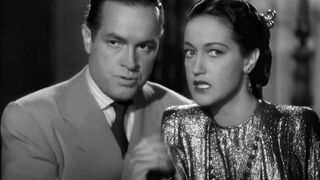

Ace in the Hole - 1951


Duration: 1:51:05
Views: 34
Submitted: 14 hours ago
Submitted by:
Description:
Billy Wilder’s Ace in the Hole (1951) is perhaps the most cynical, uncompromising, and prophetic film of the classic Hollywood era. Kirk Douglas delivers a performance of jagged, electrified intensity as Chuck Tatum, a disgraced, fast-talking big-city reporter stuck at a small-time newspaper in Albuquerque. When Tatum stumbles upon a local man, Leo Minosa, trapped in a collapsed cave while searching for ancient artifacts, he doesn't see a human tragedy; he sees a ticket back to the big leagues. By manipulating the rescue effort to prolong the victim's entrapment, Tatum creates a media circus that draws thousands of spectators, turning a life-and-death struggle into a profitable carnival of "human interest." It is a scathing indictment of sensationalism and the public’s thirst for a spectacle, released decades before the term "24-hour news cycle" even existed.
The film is a masterclass in atmosphere and spatial irony. Wilder contrasts the claustrophobic, dusty darkness of the cave where Leo is slowly dying with the sprawling, neon-lit "S crowds" that gather outside, complete with a Ferris wheel and live radio broadcasts. The supporting cast is equally cold-blooded, particularly Jan Sterling as Leo’s wife, Lorraine. Unlike the typical grieving spouse, Lorraine is a woman who sees her husband’s predicament as a way to escape her dreary life, making her a perfect, icy accomplice to Tatum’s scheme. Their relationship is devoid of romance, built entirely on mutual opportunism and a shared contempt for the "suckers" who pay admission to watch a man suffocate. This lack of a traditional moral center was so jarring to 1951 audiences that the film was a commercial failure, yet it is that very bitterness that makes it feel so startlingly modern today.
Visually, Wilder and cinematographer Charles Lang use deep focus to show the sheer scale of the exploitation, often framing Tatum in the foreground looking down upon the ant-like crowds he has summoned. The film’s original title, The Big Carnival, highlights the grotesque transformation of a sacred burial ground into a tourist trap. Tatum’s descent is not just ethical but physical; as the story progresses, he becomes increasingly haggard, eventually consumed by the very monster he created. The ending is one of the grimmest in film noir history, refusing to offer the audience the comfort of a clean redemption arc. Instead, it leaves us with a stinging reflection on our own role as consumers of tragedy.
Ultimately, Ace in the Hole remains a towering achievement because it refuses to blink. While other noir films focused on private eyes and femme fatales, Wilder aimed his lens at the press and the populace, suggesting that the real villains aren't just in the shadows—they are the ones selling the newspapers and the ones buying them. It is a film that was far ahead of its time, predicting the age of reality television and clickbait with chilling accuracy. Kirk Douglas never gave a more ferocious performance, and Wilder never directed a more honest, albeit painful, look at the darker side of the American Dream. It is a brutal, essential piece of cinema that continues to haunt the viewer long after the carnival has packed up and left town.
The film is a masterclass in atmosphere and spatial irony. Wilder contrasts the claustrophobic, dusty darkness of the cave where Leo is slowly dying with the sprawling, neon-lit "S crowds" that gather outside, complete with a Ferris wheel and live radio broadcasts. The supporting cast is equally cold-blooded, particularly Jan Sterling as Leo’s wife, Lorraine. Unlike the typical grieving spouse, Lorraine is a woman who sees her husband’s predicament as a way to escape her dreary life, making her a perfect, icy accomplice to Tatum’s scheme. Their relationship is devoid of romance, built entirely on mutual opportunism and a shared contempt for the "suckers" who pay admission to watch a man suffocate. This lack of a traditional moral center was so jarring to 1951 audiences that the film was a commercial failure, yet it is that very bitterness that makes it feel so startlingly modern today.
Visually, Wilder and cinematographer Charles Lang use deep focus to show the sheer scale of the exploitation, often framing Tatum in the foreground looking down upon the ant-like crowds he has summoned. The film’s original title, The Big Carnival, highlights the grotesque transformation of a sacred burial ground into a tourist trap. Tatum’s descent is not just ethical but physical; as the story progresses, he becomes increasingly haggard, eventually consumed by the very monster he created. The ending is one of the grimmest in film noir history, refusing to offer the audience the comfort of a clean redemption arc. Instead, it leaves us with a stinging reflection on our own role as consumers of tragedy.
Ultimately, Ace in the Hole remains a towering achievement because it refuses to blink. While other noir films focused on private eyes and femme fatales, Wilder aimed his lens at the press and the populace, suggesting that the real villains aren't just in the shadows—they are the ones selling the newspapers and the ones buying them. It is a film that was far ahead of its time, predicting the age of reality television and clickbait with chilling accuracy. Kirk Douglas never gave a more ferocious performance, and Wilder never directed a more honest, albeit painful, look at the darker side of the American Dream. It is a brutal, essential piece of cinema that continues to haunt the viewer long after the carnival has packed up and left town.
Categories:
General Audiences