
Charlie Chaplin - The Pawnshop - 1916


Duration: 26:45
Views: 160
Submitted: 3 weeks ago
Submitted by:
Description:
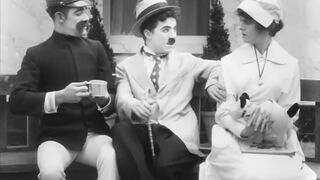
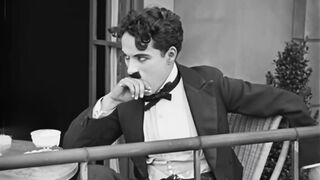
Released in 1916 during his prolific tenure at Mutual Film Corporation, The Pawnshop stands as a definitive masterclass in Charlie Chaplin’s transition from chaotic slapstick to refined, "balletic" comedy. In this short, Chaplin plays an assistant in a pawnshop who spends more time competing with a rival clerk and baffling his exasperated boss than actually performing his duties. The film is less about a rigid narrative and more about a series of brilliant, improvised sketches that transform mundane objects into sources of pure comedic magic. It represents a pivotal moment in cinema history where Chaplin began to fully realize the "object personification" that would become his trademark, turning a simple shop setting into a playground of surrealist humor.
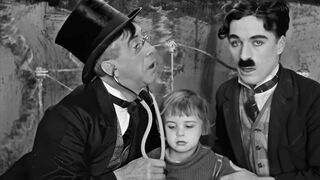
The undisputed centerpiece of the film is the legendary "Alarm Clock" scene, which remains one of the most famous sequences in silent film history. When a customer brings in a clock to be pawned, Chaplin’s Little Tramp inspects it with the precision of a medical professional and the curiosity of a child. He uses a stethoscope to listen to the device's "heartbeat," drills into it like a dentist, and eventually disembowels the mechanical guts with a can opener. By treating the clock's springs and gears as if they were biological organs or spoiled food, Chaplin demonstrates an unparalleled ability to reinterpret the physical world. This sequence perfectly encapsulates his genius for finding high art in the most ordinary of interactions.
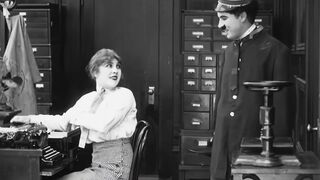
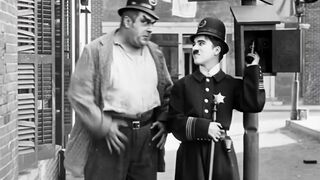
Beyond the solo brilliance of the clock scene, the film thrives on the rhythmic physical tension between Chaplin and his supporting cast. His interactions with the rival clerk, played by John Rand, are choreographed with the timing of a dance, featuring recurring gags involving ladders, buckets, and feathers that require immense athletic precision. The presence of frequent collaborators like Edna Purviance and the physically imposing Eric Campbell provides the necessary stakes to ground the Tramp’s antics. While the film concludes with a standard slapstick finale involving a thwarted robbery, its true legacy lies in the quiet, character-driven moments. Whether he is dusting an active electric fan or casually eating a piece of string like spaghetti, Chaplin’s performance in The Pawnshop proves that by 1916, he had mastered the art of visual storytelling, proving that a single, well-placed gesture could be just as impactful as a grand theatrical stunt.
The undisputed centerpiece of the film is the legendary "Alarm Clock" scene, which remains one of the most famous sequences in silent film history. When a customer brings in a clock to be pawned, Chaplin’s Little Tramp inspects it with the precision of a medical professional and the curiosity of a child. He uses a stethoscope to listen to the device's "heartbeat," drills into it like a dentist, and eventually disembowels the mechanical guts with a can opener. By treating the clock's springs and gears as if they were biological organs or spoiled food, Chaplin demonstrates an unparalleled ability to reinterpret the physical world. This sequence perfectly encapsulates his genius for finding high art in the most ordinary of interactions.
Beyond the solo brilliance of the clock scene, the film thrives on the rhythmic physical tension between Chaplin and his supporting cast. His interactions with the rival clerk, played by John Rand, are choreographed with the timing of a dance, featuring recurring gags involving ladders, buckets, and feathers that require immense athletic precision. The presence of frequent collaborators like Edna Purviance and the physically imposing Eric Campbell provides the necessary stakes to ground the Tramp’s antics. While the film concludes with a standard slapstick finale involving a thwarted robbery, its true legacy lies in the quiet, character-driven moments. Whether he is dusting an active electric fan or casually eating a piece of string like spaghetti, Chaplin’s performance in The Pawnshop proves that by 1916, he had mastered the art of visual storytelling, proving that a single, well-placed gesture could be just as impactful as a grand theatrical stunt.
Categories:
General Audiences